Stress and Anxiety Assessment Survey

In today's fast-paced world, stress and anxiety have become part of everyday life. But what if you could measure them—simply and accurately?

The Stress and Anxiety Assessment Survey helps individuals, professionals, and organizations monitor mental health levels, spot warning signs early, and make informed well-being decisions.

Why Is This Survey Important—And Why Now?

From workplace burnout to academic pressure and digital overload, the causes of stress and anxiety are multiplying. Yet, most people walk through life unaware of how deeply these factors are affecting their mental health.

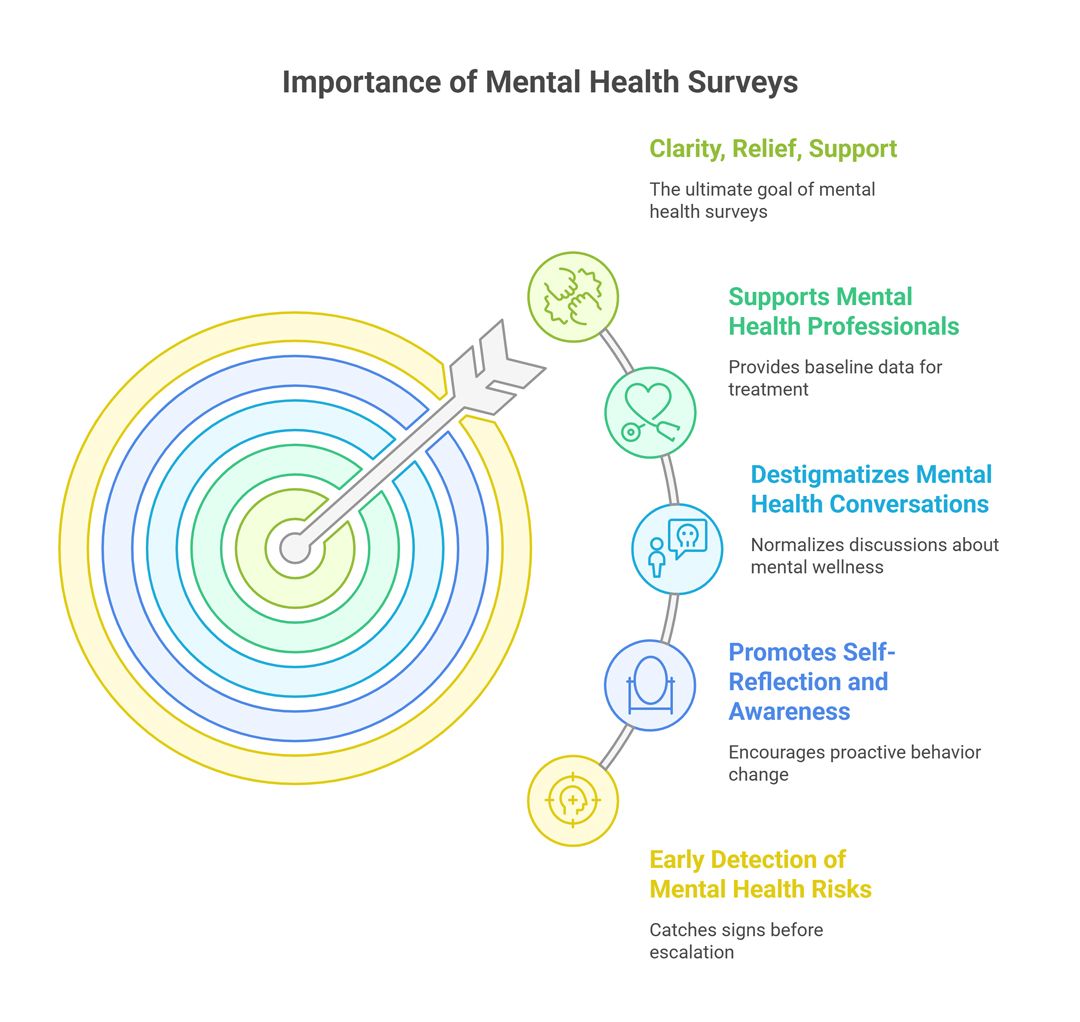
The Stress and Anxiety Assessment Survey isn’t just another digital form—it’s a gateway to greater self-awareness and mental clarity. In a world where mental well-being is as crucial as physical health, this survey offers an accessible and reliable method to:

  • Identify signs of chronic stress or anxiety before they become clinical conditions.

  • Monitor mental health over time—weekly, monthly, or seasonally.

  • Provide data-driven feedback for individuals, HR teams, educators, or therapists.

  • Encourage proactive support, whether it’s personal change or professional help.

  • Normalize conversations around mental health in homes, workplaces, and classrooms.

The ongoing rise in global anxiety levels—especially post-pandemic—has made tools like this more relevant than ever. Whether you're managing a team, a class, or your own personal wellness, you need more than intuition. You need insight.
And insight starts with asking the right questions—calmly, consistently, and with purpose.

 What Is the Stress and Anxiety Assessment Survey?

At its core, the Stress and Anxiety Assessment Survey is a structured tool designed to help individuals evaluate their emotional and physiological responses to daily stressors.

This survey typically consists of a series of Likert-scale questions that assess how often a person experiences symptoms related to anxiety or stress—such as restlessness, irritability, sleep disturbances, or difficulty concentrating.

The survey can be:

  • 📝 Self-administered: Individuals can fill it out privately, whether for personal tracking or guided therapy.

  • 🧪 Clinically supported: Mental health professionals use similar assessments like GAD-7 or DASS-21 to screen for generalized anxiety and stress levels.

  • 🏢 Organization-wide: HR departments may use this type of form to assess team well-being and prevent burnout.

  • 🎓 Educational: Schools and universities can apply it to understand student pressure and offer mental health interventions.

Its goal isn't to diagnose, but to highlight patterns, offer clarity, and support informed action—whether that’s a conversation, lifestyle change, or referral to a professional.

Think of it as a mirror—not a verdict. It reflects how you're feeling, so you can take the next step with confidence.

Log in to Porsline and start analyzing your surveys with precision and professionalism — for free!

Click Here for a Free Trial

 Why Does This Survey Matter in the Field of Mental Health?

In psychology, what can’t be measured often gets ignored. That’s why structured mental health assessments are fundamental to prevention, support, and early intervention.

The Stress and Anxiety Assessment Survey plays a vital role in both clinical and non-clinical mental health strategies.

Here’s why it matters:


  1. Early Detection of Mental Health Risks
    Subtle changes in stress levels or recurring anxiety symptoms may go unnoticed without structured check-ins. This survey helps individuals and practitioners catch signs early—before they escalate.

  2. Objective Data for Mental Wellness Programs
    Organizations and educational institutions rely on real data to plan employee wellness programs, stress management workshops, or psychological support. A standardized survey provides that data.

  3. Promotes Self-Reflection and Awareness
    Regularly assessing one’s emotional state creates awareness that leads to proactive behavior change—such as setting boundaries, seeking therapy, or adjusting workload.

  4. Destigmatizes Mental Health Conversations
    When mental health is measured and discussed through simple tools like surveys, it becomes part of the culture. The more people engage with these tools, the more normalized and approachable mental wellness becomes.

  5. Supports Mental Health Professionals
    Therapists, counselors, and coaches often use survey results as baseline data to tailor treatment plans, track progress, or understand the severity of a client’s condition.

This simple tool holds immense value—because behind every response is a person seeking clarity, relief, or support.

Common Types of Stress and Anxiety Assessment Surveys

While all stress and anxiety surveys aim to evaluate mental well-being, they differ in format, purpose, and professional use. Choosing the right one depends on context—personal, organizational, or clinical.

Here are the most commonly used types of assessment surveys:

1. DASS-21 / DASS-42 (Depression, Anxiety, Stress Scale)

  • Developed by psychologists to measure emotional states.

  • DASS-21 includes 21 items; DASS-42 includes 42.

  • Divided into three subscales: depression, anxiety, and stress.

  • Widely used in research and clinical settings.

2. GAD-7 (Generalized Anxiety Disorder Scale)

  • Consists of 7 questions.

  • Designed to screen for generalized anxiety disorder.

  • Scoring helps determine severity (mild to severe).

  • Suitable for self-assessment and clinical use.

3. Workplace Stress Assessment

  • Tailored for HR and management teams.

  • Measures stressors like workload, deadlines, team conflict, and leadership pressure.

  • Helps prevent burnout and improve employee engagement.

4. Academic Stress Surveys

  • Target students across school and university levels.

  • Evaluates stress caused by exams, peer pressure, deadlines, and future uncertainty.

  • Supports counselors and educational administrators.

Each of these surveys offers a unique lens into the emotional landscape of the respondent. Whether scientifically validated or custom-built, they serve the same higher purpose: helping people understand and improve their mental health.

 Top Questions to Include in a Stress and Anxiety Survey

The effectiveness of any mental health survey depends on the quality of its questions. A well-designed questionnaire captures not just how someone feels—but how often, how intensely, and how it affects their life.

Below is a curated list of essential questions using a Likert scale (1 to 5), where 1 = Never and 5 = Always.

 Suggested Question Table:


Question Type Scale
How often have you felt stressed or overwhelmed in the past 7 days? Likert Scale 1 (Never) to 5 (Always)
Have you had trouble concentrating or thinking clearly? Likert Scale 1 to 5
Have you felt unusually irritable or short-tempered? Likert Scale 1 to 5
How often have you experienced physical symptoms (e.g., stomach issues, headaches) without a medical cause? Likert Scale 1 to 5
Have you had difficulty falling or staying asleep? Likert Scale 1 to 5
Have everyday tasks felt more exhausting than usual? Likert Scale 1 to 5
Have you experienced heart palpitations or shortness of breath without exertion? Likert Scale 1 to 5
Have you noticed a change in your appetite or eating patterns? Likert Scale 1 to 5
Have you withdrawn from social interactions or felt the need to isolate? Likert Scale 1 to 5
Would you like to share anything else about your emotional state? Open Comment Free text


This mix of psychological, emotional, and physical indicators provides a well-rounded snapshot of the respondent’s state. The final open-ended comment adds a human voice to the data, often revealing insights beyond numbers.

Log in to Porsline and start analyzing your surveys with precision and professionalism — for free!

Click Here for a Free Trial

How to Create the Survey Step-by-Step on Porsline (With Smart Features)

You don’t need to be a tech expert to build a professional mental health survey. With Porsline, you can create a powerful, fully customizable Stress and Anxiety Assessment Survey in just minutes—enhanced with automation, logic, and real-time reporting.

 Step-by-Step Guide:

1. Login and Create a New Survey

2. Set Up Survey Title and Welcome Message

  • Title example: “Personal Stress and Anxiety Tracker”

  • Add a clear intro:
    “This survey helps you track your emotional well-being. Your responses are private and will not be shared.”

3. Add Questions with Scoring Logic

  • Insert your Likert-scale questions (1–5).

  • Assign scores to each answer to auto-calculate stress levels.

4. Activate Smart Features

Here’s what makes Porsline powerful:

  • Scoring System: Automatically assign numeric values to each response and calculate total scores.

  • Conditional Logic (Show/Hide): Show extra questions only if high stress levels are detected.

  • Custom Thank You Page: Display a result message like:
    “Your stress level appears moderate. Consider taking a short break or speaking with a counselor.”

  • Email Notification to Respondents: Automatically email them their result or helpful content.

  • Email Alerts to Admins or Mental Health Leads: Get notified instantly when someone submits a response.

  • Visual Reports & Custom Filters: Analyze scores with graphs and segment responses by department, date, or risk level.

5. Design and Branding Tips

  • Background: soft blue or white (calm tone)

  • Buttons: deep green (positive action)

  • Font: Clean and readable (e.g., Cairo, Inter)

  • Add your organization’s logo or icon for credibility

With Porsline, you’re not just creating a form—you’re building a fully functional emotional insight system. It’s smart, responsive, and personalized—for every individual who needs it.


FAQ About Stress and Anxiety Assessment Surveys

What is the best survey to measure stress and anxiety?

Surveys like GAD-7 and DASS-21 are scientifically validated and widely used. However, platforms like Porsline allow you to create fully customized surveys tailored to your audience—whether individuals, teams, or organizations.

Can this survey be used in the workplace?

Absolutely. Many HR departments use stress and anxiety surveys to assess employee well-being, reduce burnout, and design mental health programs based on real data.

How long does it take to complete this type of survey?

On average, it takes 3–5 minutes to complete. Keeping it short improves participation and data accuracy.

Are the results medically reliable?

While the survey is not a clinical diagnosis, it’s a powerful indicator of potential stress or anxiety. It helps flag when someone may need to seek professional help or adjust their lifestyle.

How are the responses analyzed?

With Porsline, responses are automatically visualized through charts and filters. You can categorize respondents into levels like low, moderate, or high stress using scoring rules.

Can participants receive their results automatically?

Yes. You can configure automated thank-you messages or email notifications that share a personalized result or suggestion after completing the survey.

Is there a free version available?

Porsline offers a free plan where you can create and launch this survey. For advanced features like conditional logic, email alerts, or branded reports, you can upgrade to a professional plan.

Related forms & survey templates